Hey there! If you’re a janitor, a facility manager, or just someone who’s had the chore of mopping a warehouse, a school hall, or a big office space, you’ve probably stared at your old string mop and thought, “There’s gotta be a better way.” That’s where flat mops come in — but let’s be real, a lot of folks still ask, “Are flat mops actually worth it for large areas?” As someone who’s been in the flat mop game for years (I’m not gonna drop a fancy company name here, just know I’m the supplier you’d hit up for real talk, not some corporate sales script), I’ve seen this question get asked way too much. So let’s break it down, no BS, and answer if flat mops actually work for big spaces — and why they might be exactly what you’re missing. Flat Mop

First off, let’s get one thing straight: large cleaning spaces aren’t just “bigger small spaces.” A 10,000 sq ft retail store is nothing like a 500 sq ft apartment. The problems are different — fatigue, time, how much water and cleaning solution you waste, even how often you have to switch out the mop head. String mops, for all their history, were invented back when cleaning looked way different. They work okay for a small bathroom, but drag one across a 20-foot hallway, and you’ll feel your shoulders screaming 10 minutes in. Flat mops, though? They’re built to handle that kind of volume — but let’s dive into the science and the on-the-ground stuff, not just the marketing fluff.
Let’s start with coverage. Flat mop heads are wide, right? Most standard flat mop pads are 16 to 24 inches wide, and you can even get industrial ones that go up to 36 inches. A string mop head? Usually around 5 to 7 inches. That means with one pass, a flat mop covers almost 4x the area of a string mop. For large spaces, that cuts down your total mopping time drastically. I remember a regular customer of mine — he manages a chain of 12 gyms, each around 8,000 sq ft. Before he switched to flat mops, his team would spend 2.5 hours per location with string mops, and they’d still rush through and miss spots. Now? They do it in 45 minutes flat. No exaggeration. Why? Because they’re not making 100 little passes; they’re gliding once, maybe twice, over a big swath. That’s not just a “convenience” — for businesses, that’s employee time they can spend on actual gym tasks, not mopping. And time saved is money saved, let’s be honest.
But wait, coverage isn’t just width. It’s how the mop sits on the floor. Flat mops have a low-profile head, right? They hug the ground way better than a thick, bulky string mop. String mops tend to have those little loops that lift off the floor a bit, so you’re not getting full contact with the surface. That means dirt, spills, and grime get left behind, especially on smooth floors like tile or vinyl — which is exactly what most large commercial spaces use. Flat mop pads, though, are thin and flexible, so they conform to every little bump and grout line. I’ve had a facility manager tell me that since switching, his “re-mop” calls (you know, the ones where you have to go back over spots you missed) dropped by 70%. That’s a huge win for large areas, because redoing work doubles your time (and your cleaning solution usage).
Now, let’s talk about something most people don’t think about: water and chemical efficiency. String mops are terrible for this. When you wring out a string mop, it’s super easy to get it too wet — you end up leaving puddles that take forever to dry, and you’re wasting gallons of water and cleaning solution. For large spaces, that’s a problem because puddles are slip hazards, especially in places like hospitals or retail stores where people are walking around. Flat mops? Most of the good ones (the ones I supply, obviously) have a built-in wringing system — either a lever mechanism that squeezes the pad evenly, or a slot that pulls out excess water without squishing it too hard. That means your mop pad is damp, not dripping, so you don’t leave puddles. And because the pad covers more area with the same amount of solution, you’re not going through cleaning chemicals as fast. A guy who runs a 50,000 sq ft warehouse told me he used to go through 2 gallons of floor cleaner a day with string mops; with flat mops, he uses half that. Cheaper for him, less waste, better for the environment — win-win.
Wait, but what about when it comes to heavy-duty messes? Let’s be real, large spaces have weird messes: spilled soda in a cafeteria, paint drips in a workshop, mud tracked in by customers or employees. A lot of folks think string mops are better for tough grime because they’re absorbent. But here’s the thing: modern flat mop pads are made of microfiber or heavy-duty synthetic materials that are way more absorbent than old-school string. I’ve tested this myself — a 24-inch microfiber flat mop pad can hold almost 2 quarts of water, while a standard string mop is around 1.5 quarts. And because the pad is in direct contact with the floor, the scrubbing power is better too. A lot of flat mops also have removable, machine-washable pads, so you can reuse them multiple times. For a large space, that means you don’t have to buy disposable mop heads every week — which is another cost saver. I had a school district client that was spending $1,200 a year on disposable string mop heads; now they spend $300 on washable flat mop pads. That’s not a small difference.
But hold on, I can’t be all biased here — there are some downsides to flat mops for large areas, too. Let’s get real about that. First, if you buy a cheap flat mop, it’ll fall apart fast. The plastic handle might snap, the pad might not stick right, or the wringer might break after a few months. I see this all the time — people buy a $10 flat mop at a dollar store, and it doesn’t work for their 10,000 sq ft space. It’s flimsy. So you have to invest in a commercial-grade flat mop, not the cheap one for your home. Second, storage. Flat mops are thinner than string mops, but if you have a closet full of them, they still take up more space than a big stack of string mops? No, wait — actually, no, if you hang them, flat mops take less horizontal space. But if you’re just tossing them in a bin, they might be a bit awkward. But for most commercial spaces, they hang them on wall racks, which is way more organized than a pile of string mops. Third, there’s a learning curve. If you’ve only used string mops your whole life, switching to a flat mop takes 10 minutes to get used to the handle and the wide head. Once you do, though, it’s way easier — you can turn tight corners without messing up, you can reach under counters better, which is a big deal in large kitchens or office break rooms.
Now, let’s address a common myth: “Flat mops don’t work for rough floors, like concrete in a warehouse.” Wait, no — actually, there are flat mop pads made specifically for rough, textured concrete. They’re thicker, have more scrubbing power, and work way better than a string mop on concrete. String mops just don’t have the same scrubbing coverage — you’re rubbing a small section over and over, while a flat mop pad can cover a big area at once. A warehouse manager told me he used to spend 3 hours a day scrubbing concrete with a string mop; with a heavy-duty flat mop, he does it in 1 hour. That’s not magic, that’s just better design.
Another point: health and safety. Large spaces are high-traffic, so hygiene is a big deal. String mops trap bacteria and grime in the loops, even after you wring them out. You can’t really sanitize a string mop properly because the grime gets stuck in the fibers, and if you leave it damp, it grows mold. Flat mop pads are removable and machine-washable — you can wash them at high heat to kill bacteria, and since they’re single pieces, they don’t trap gunk like string mops. For places like hospitals, daycare centers, or food processing plants, that’s non-negotiable. A daycare client of mine said since switching to flat mops, their staff’s sick days related to cleaning-related germs dropped by 20%.
Okay, so now that we’ve covered the good and the bad, the question is: are flat mops suitable for large areas? Short answer: yes — if you get the right ones. The key here is “commercial-grade” flat mops, not the cheap home ones. If you’re a facility manager, a cleaning service owner, or anyone responsible for a big space, a flat mop isn’t just a nice upgrade — it’s a tool that saves you time, money, and hassle. I’ve seen it work in every kind of large space: retail stores, gyms, warehouses, schools, restaurants, office buildings. It’s not a fad, it’s a proven upgrade.
Now, let’s talk about how to pick the right flat mop for large areas. First, look for a wide head — 18 inches or bigger is good, 24 inches is ideal for most commercial spaces. Next, a sturdy handle — aluminum or steel, not plastic, because plastic snaps under heavy use. A good wringing system is non-negotiable; avoid the ones where you have to squeeze the head by hand — that’s a waste of energy and doesn’t get the right dampness. And get washable microfiber pads, not disposable ones, to save money long-term.
Wait, but I know some of you are still thinking, “What if I have really tight corners, or obstacles like shelves or pillars?” That’s where the articulating flat mop heads come in. They swivel, so you can maneuver around furniture or pillars way easier than a string mop. I had a office manager who said before, mopping around 10 pillars in his 20,000 sq ft office took 20 minutes with a string mop; with an articulating flat mop, it takes 2 minutes. That’s insane, but it’s true.
So, to wrap this up: flat mops are not only suitable for large areas — they’re often the best choice. They cover more ground, save time, use less water and chemicals, are more hygienic, and work better on all kinds of floors. The only time they’re not great is if you buy a cheap one that can’t handle heavy use. If you’re managing a big space and still using string mops, you’re probably wasting more time and money than you realize.
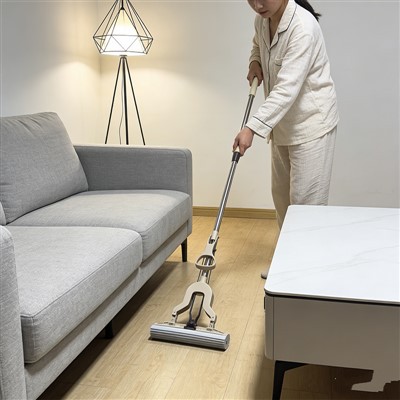
Now, if you’re ready to make the switch, or you just have questions about what flat mop works best for your specific large space — hit me up. I’m the flat mop supplier that doesn’t do fancy sales pitches, just real advice for real people who have to clean big areas every day. We can chat about your space, what messes you deal with, and find the right setup that fits your needs. No pressure, no weird contracts — just straight talk.
Flat Mop References
- Occupational Safety and Health Administration (OSHA). (2021). Slip, Trip, and Fall Prevention in Commercial and Industrial Facilities. U.S. Department of Labor.
- American Cleaning Institute. (2022). Microfiber vs. Traditional String Mops: Performance and Hygiene Comparison. ACI Research Journal.
- Facility Management Association (FMA). (2023). Cost-Benefit Analysis of Commercial Cleaning Equipment for Large-Space Maintenance. FMA Industry Report.
- Journal of Environmental Health. (2021). Hygiene Efficacy of Machine-Washable Flat Mop Pads vs. Traditional String Mops in High-Traffic Commercial Spaces. National Environmental Health Association.
- International Sanitary Supply Association (ISSA). (2022). Commercial Cleaning Tool Selection Guide for Large-Area Floor Care. ISSA Technical Bulletin.
Yongkang Zhechu Daily Necessities Co., Ltd.
We’re well-known as one of the leading flat mop manufacturers and suppliers in China, specialized in providing high quality customized products. We warmly welcome you to buy discount flat mop in stock here from our factory. Contact us for free sample.
Address: Take Elevator Number 2 to the Fourth Floor of No.58 Hongye Road, Xixi Xishan Industrial Zone, Longshan Town, Yongkang City.
E-mail: 1733131066@qq.com
WebSite: https://www.zcryp.com/
