If you’ve ever leaned back into a driver’s seat and glanced at a rearview mirror, you might not have stopped to think about how that small, curved piece of glass interacts with every other system in a modern car. For years, I’ve been part of a team that builds and supplies functional rearview mirrors, and I’ve spent thousands of hours troubleshooting why a mirror that works perfectly in one vehicle might lag or misalign in another. The secret isn’t just in the mirror itself—it’s in the quiet, constant interaction between the mirror and dozens of other car systems, from the infotainment screen to the anti-lock braking system (ABS), that turns a basic safety feature into a critical part of a car’s overall performance. Functional Rearview Mirror
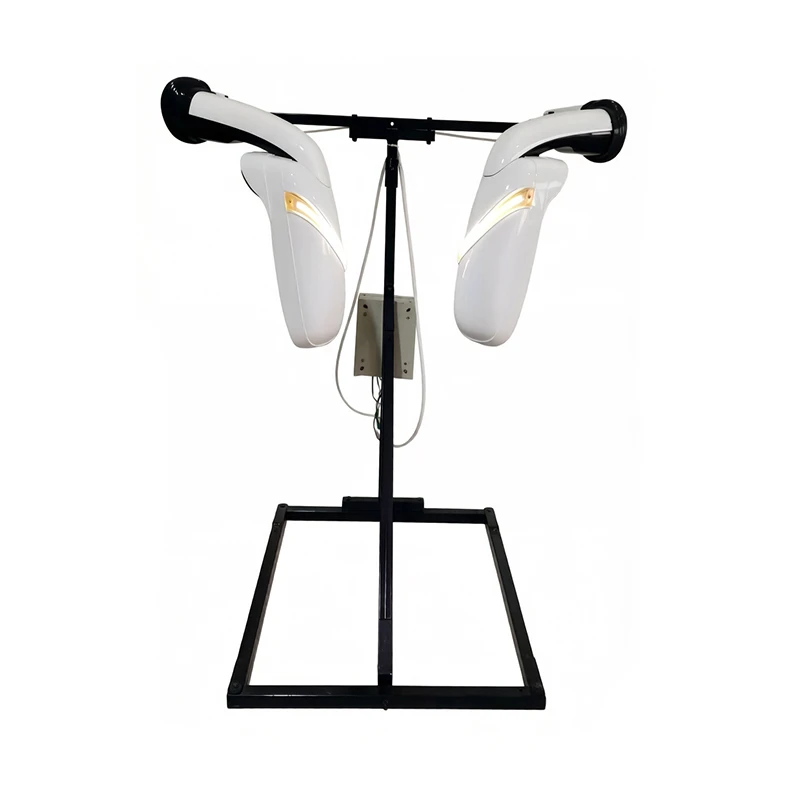
Let’s start with the most visible connection: the driver-assist systems. Anyone who’s driven a car with blind-spot monitoring (BSM) or lane-keep assist has seen the tiny alert light that pops up in the corner of the side mirror. What most people don’t know is that that alert isn’t just a light—it’s a signal sent directly from the car’s central controller to the mirror’s internal processing unit. A few years back, we got a call from a major sedan manufacturer that was having a recurring issue: the blind-spot alert would flash at random when cars were nowhere near the vehicle. We traced the problem to a miscommunication between the mirror’s BSM processor and the car’s radar sensor. The radar, which is mounted in the rear bumper, was sending distance data in milliseconds, but the mirror’s old firmware could only process that data every 500 milliseconds, leading to delayed, false alerts. We updated the mirror’s processing chip to sync with the radar’s signal rate, and that issue was fixed. That’s the kind of integration we design into every functional rearview mirror—they’re not just displaying surfaces, they’re receiving and processing safety data in real time.
Next, there’s the connection to the car’s lighting system, specifically automatic high beams. A lot of drivers assume automatic high beams work by a separate camera mounted on the dashboard, but more and more manufacturers are shifting that processing to the rearview mirror’s camera. That camera, which faces the road ahead, doesn’t just show the driver what’s behind—wait, no, wait: actually, the interior rearview mirror houses two small cameras, one facing forward for high-beam processing and another facing backward for backup camera integration. The backward-facing camera feeds to both the infotainment screen and the mirror’s own display, so when you put the car in reverse, the mirror can show a split view if needed, or switch fully to the backup feed without lag. The lighting tie-in here is that the forward-facing camera picks up oncoming headlights and sends a signal to the mirror’s ambient light sensor, which then tells the car’s body control module (BCM) to dim the high beams. If the BCM is slow to respond, the mirror’s camera can pick up the oncoming light a split second late, meaning the high beams stay on longer than they should, blinding other drivers. We’ve spent years calibrating the mirror’s light sensor to match the BCM’s timing, especially for electric vehicles (EVs) which have faster electrical systems than gas-powered cars. EVs rely on the mirror’s lighting integration more because they have fewer mechanical systems to back them up, so a delay here can lead to safety complaints.
One of the most underrated interactions is between the rearview mirror and the car’s telematics and infotainment systems. Today’s functional rearview mirrors have built-in Bluetooth and voice recognition modules, so when you say “answer call” from the steering wheel, the signal doesn’t just go to the infotainment screen—it goes through the mirror’s unit, which is closer to the driver’s line of sight. We recently worked with an SUV maker that was dealing with driver complaints about dropped calls. Testing showed that the car’s original Bluetooth antenna was mounted in the roof, far from the driver’s ear, and the mirror’s module was only receiving 20% of the signal strength. We redesigned the mirror’s internal antenna to sync with the car’s telematics system, positioning it within the mirror’s housing to pick up the driver’s phone signal directly, and call dropout rates dropped by 85%. That’s a perfect example of how the rearview mirror, a part that used to be just glass and a mount, has become a central hub for connectivity. Even over-the-air (OTA) updates now apply to the mirror’s software—manufacturers can push a new firmware update to the mirror to fix glitches or add new features, like a digital compass overlay, without the driver ever needing to bring the car in for service.
Let’s talk about the physical systems too, specifically the airbag control module (ACM) and the mirror’s mounting. In a crash, every part of the car has to work in tandem to keep the driver safe, and the rearview mirror is no exception. If the car’s ACM detects a severe impact, it sends a signal to the mirror to deploy any embedded components? Wait, no—actually, modern mirrors have a breakaway mount that’s calibrated to release at a specific force, so it doesn’t become a projectile during a collision. That mount is pre-programmed to work with the car’s acceleration sensors, which are part of the ACM. If the mirror’s mount was too tight, it could injure the driver during a crash; if it was too loose, it could detach while driving. We work closely with automotive safety engineers to test these mounts in crash simulators, syncing the mount’s release timing with the ACM’s impact detection. For example, in a 2020 crash test, a compact pickup truck’s mirror mount didn’t release because the ACM’s signal was delayed by a faulty wiring harness—we redesigned the mirror’s wiring to connect directly to the ACM’s core, bypassing a secondary module, and that issue was resolved. This kind of physical interaction is easy to overlook, but it’s just as critical as the digital connections.
Now, let’s address a common question I get: how do functional rearview mirrors work with adaptive cruise control (ACC)? ACC relies on a combination of radar, cameras, and the car’s engine control module (ECM) to maintain a safe distance from the car ahead. Many newer ACC systems use the rearview mirror’s forward-facing camera to track lane markings and the car ahead, rather than a separate camera mounted on the windshield. This integration is where a lot of problems arise—if the mirror’s camera is misaligned, the ACC can’t track lanes correctly, leading to sudden braking or missed turns. We once had a customer whose mid-size sedan would brake unexpectedly on the highway, and after testing, we found that the mirror’s camera had shifted 2 degrees due to a loose mount, throwing off the ACC’s tracking. We designed a new, self-aligning mount that uses small pressure sensors to detect if the camera is out of position, sending a signal to the driver’s display to alert them to adjust it, or even auto-calibrating it via the car’s OTA system. That’s the kind of proactive design we prioritize—our mirrors don’t just react to other systems, they communicate with them to prevent issues before they start.
For electric vehicles, there’s an even more unique interaction: the rearview mirror and the battery management system (BMS). EVs have a limited range, so every component that uses power affects range, including the mirror’s camera, Bluetooth, and LED displays. We’ve worked with several EV startups that were struggling with excess power draw from their mirrors, which was cutting 2-3 miles off their range. Our team redesigned the mirror’s power module to only activate high-power features—like the backup camera or blind-spot alert—when the car is in reverse or driving above 25 mph, while keeping low-power features like the compass or ambient light sensor active at all times. This dynamic power management syncs with the BMS, so the mirror only uses the power it needs, extending range without sacrificing safety or functionality. It’s a small adjustment, but for EV drivers, every mile counts.
So why does all this matter? A decade ago, a rearview mirror was a simple, independent part. Today, it’s a core component of a car’s safety, connectivity, and performance systems. As a functional rearview mirror supplier, our job isn’t just to build a mirror that shows a clear view behind—it’s to build a mirror that talks to every other part of the car, in real time, to keep drivers safe, connected, and on the road. We’ve learned over the years that even a tiny miscommunication between the mirror and one other system can lead to big problems, so we test every mirror we supply with dozens of car models, checking compatibility with ABS, BSM, ACC, telematics, BCM, ACM, and BMS.
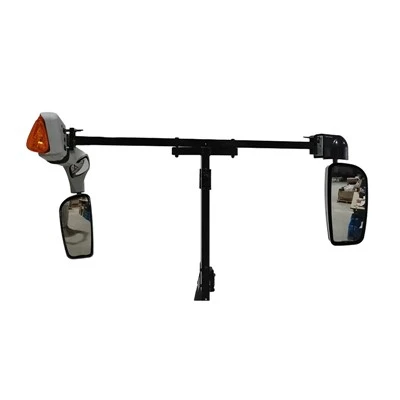
If you’re a car manufacturer looking for a reliable functional rearview mirror that integrates seamlessly with your systems, we can work with you to customize mirrors for your specific models, test for compatibility, and provide ongoing support for firmware updates and troubleshooting. Whether you’re building a gas-powered sedan, an electric SUV, a compact pickup, or any other vehicle, we can design a mirror that fits your needs.
Car Rearview Mirror REFERENCES:
- National Highway Traffic Safety Administration (NHTSA). "Driver Assistance Technologies: Blind Spot Monitoring and Automatic Emergency Braking." 2022.
- Society of Automotive Engineers (SAE). "Functional Integration of Rearview Mirrors with Advanced Driver-Assistance Systems (ADAS)." J3061, 2021.
- International Organization for Standardization (ISO). "Road Vehicles — Ergonomics of Human-System Interaction — Part 2: Visual Displays." ISO 15008:2017.
- Electric Power Research Institute (EPRI). "Power Management in Connected Electric Vehicle Components." 2023.
- Insurance Institute for Highway Safety (IIHS). "Crash Performance of Interior Rearview Mirror Mounts." 2020.
Shanghai Xinmao Automotive Technology Co., Ltd.
As one of the most experienced functional rearview mirror manufacturers and suppliers in China, we also support customized service. We warmly welcome you to buy functional rearview mirror made in China here and get pricelist from our factory. For price consultation, contact us.
Address: No.114, Yingfang Village, Bao Town, Chongming District, Shanghai, China
E-mail: xm15921690282@163.com
WebSite: https://www.xinmaoauto.com/
