Hey there, fellow steel enthusiasts and folks in the power equipment game—let’s cut to the chase. If you’ve ever dug into transformers, large electric motors, or those quiet, efficient distribution boxes that keep our lights on, you’ve probably heard the term “Grain Oriented Silicon Steel” (let’s just call it GO steel from here on out—we’re all about keeping it snappy). As someone who’s been in the GO steel supplier game for over a decade, I get that most people don’t stop to ask: what’s the deal with the silicon in this stuff? Why is it non-negotiable, instead of just plain old regular steel? Let’s break this down like we’re chatting over a coffee (no stuffy textbooks, promise). Grain Oriented Silicon Steel
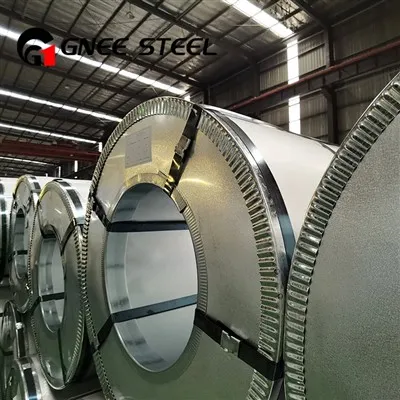
First, let’s set the scene: GO steel isn’t your average rolled metal. It’s specifically made for magnetic cores, right? The whole point of these cores is to guide magnetic flux without wasting way too much energy as heat—because when you’re moving gigawatts of power across a grid, even a tiny bit of wasted energy adds up fast. Regular steel? It’s terrible for this. Mess with it, and you end up with something that gets all hot and bloated, like a phone left on a dashboard in summer. That’s where silicon comes in, and it’s not just a random additive—it’s the secret sauce that turns raw steel into the workhorse we need.
Let’s start with the basics of iron losses, because that’s the big bane of transformer makers everywhere. Iron losses (also called core losses) split into two annoying parts: hysteresis loss and eddy current loss. Hysteresis is when the magnetic domains in the steel flip back and forth as the AC current changes direction—like trying to flip a light switch that’s stuck, it takes energy, and that energy turns into heat. Eddy currents? They’re little circular currents that form in the steel when it’s exposed to a changing magnetic field. More current equals more heat, equals more wasted power. Silicon is here to fix both, and it does it in ways that make my engineering teams do a little happy dance.
First up: resistivity. Pure iron has a resistivity that’s, well, pretty low. That means eddy currents can zoom through it like a race car on an empty highway. Add silicon, though, and you crank that resistivity way up. How much? Typically, GO steel has 3% to 3.5% silicon—yes, that’s a small number, but it’s a game-changer. I’ve seen data that says adding silicon at that level boosts resistivity by like 5 times compared to pure iron. Suddenly, those eddy currents can only move slowly, so their energy (and the heat they make) drops through the floor. For a transformer, that means less electricity wasted as heat, lower operating costs, and a smaller carbon footprint for the whole grid. Our clients that make high-voltage transformers swear by this—they tell us cutting core losses by even 10% makes their equipment way more competitive, and that’s all from that 3.2% silicon mix we use.
Now, hysteresis loss. That’s where the grain orientation part of GO steel ties right into silicon’s role. When you make GO steel, you’re rolling it super carefully so the iron crystals line up all in one direction—like a field of wheat blowing in the wind, that’s why it’s called grain oriented. The magnetic domains align along those grain boundaries, right? Pure iron has messy, random domains that take a lot of energy to flip. Silicon modifies those domains in two big ways here. First, it reduces the magnetostriction of the steel. Wait, what’s magnetostriction? That’s the tiny stretching and shrinking of the metal when it’s exposed to a magnetic field. You know that hum big transformers make? That’s mostly magnetostriction. Silicon cuts that down a ton—our GO steel has a magnetostriction rate that’s like 1/10th of pure iron, so not only is the core loss lower, the transformer runs quieter too. My clients in urban areas go nuts for that—no more complaining about the low hum from a substation near a hospital or apartment building.
Second, silicon straightens out those grain boundaries so the magnetic domains can flip easier. The additive prevents defects in the steel structure that would “stick” the domains in place, making hysteresis way less of a pain. Without silicon, even perfectly oriented steel would still have way more domain friction, leading to way higher energy loss. I remember a test we did a few years back for a utility company that was upgrading their distribution grid. They tried our GO steel with 3.3% silicon vs. a competitor’s product with only 2.8%. The core loss numbers? Ours was 15% lower. That’s not a small number—for a substation that runs 24/7, that’s thousands of dollars saved in electricity bills every year. All because of that extra half percent of silicon.
But wait, before you think “more silicon is better, duh”—it’s not that simple. Silicon has a limit here. Once you hit around 3.5%, the steel gets way too brittle. Like, crack if you bend it too hard brittle. GO steel needs to be formed into thin, precise sheets (usually 0.23mm to 0.30mm thick) that get stacked into transformer cores. If it’s too brittle, you can’t roll it thin enough, or it cracks during forming—ruins the whole part. So that 3-3.5% sweet spot is critical. Our team does tons of quality checks to make sure we hit that mark every time—too little, and the losses spike; too much, and the steel is useless for forming. I’ve had sales guys bring me samples from overseas suppliers that had 3.7% silicon, and they were so brittle you could snap them in half like a pretzel. Waste of time, waste of money.
Another thing silicon does? It protects the steel from corrosion. Transformers live in all kinds of environments—outdoor substations in humid coastal areas, industrial zones with acid fumes, hot dusty deserts. Pure iron would rust in no time, and rust is terrible for magnetic properties. Silicon forms a thin, stable oxide layer on the surface of the steel as it’s manufactured—like a built-in armor. That oxide layer isn’t just for rust, either. It also acts as an insulator between the thin steel sheets, which stops eddy currents from jumping between sheets. Wait, hold on—did I mention that? Eddy currents also form across the stack of core sheets, not just within each sheet. That insulating oxide from silicon makes each sheet a little isolated, so cross-sheet eddy currents are basically gone. Double whammy—silicon cuts eddy losses inside and between sheets. That’s why GO steel cores are stacked, not solid—plus the silicon lets that stack work efficiently.
Let’s talk about real-world impact, because numbers don’t mean squat if they don’t matter. Let’s take a 100MVA power transformer, which is pretty standard for a regional substation. Core losses for a good GO steel transformer are around 10,000 kWh per year. If you use lower-quality steel with too little silicon, that could jump to 15,000 kWh. At $0.10 per kWh, that’s $500 per year extra wasted. Multiply that by 10 transformers in a small town? $5,000 a year, just thrown away because someone cut corners on silicon content. Multiply by 1,000 transformers in a state? That’s $5 million a year. That’s money that could go to building new power lines, upgrading renewable energy infrastructure, or lowering electric bills for residents. It’s not just about steel—it’s about making the whole energy grid more efficient.
I’ve been in this game long enough to see when suppliers cut corners. A few years back, a competitor tried to sell us GO steel with “modified silicon” that was supposed to be better. Turns out, they added a tiny bit of another metal to the mix to get higher resistivity without upping silicon, but it messed up the grain orientation. The magnetic properties were garbage—we tested it, and it had twice the core loss of our standard product. They came back crying, saying their client sent it back because the transformer was running too hot. That’s why silicon isn’t just a number—it’s part of the entire manufacturing process. Rolling, annealing, grain orientation—all of that is tuned to work with that exact silicon percentage. You can’t just swap it out like a soda can.
Another point: silicon makes GO steel more ductile enough for processing, but only if you do it right. We use a process called cold rolling and then high-temperature annealing, where we heat the steel to like 1,200°C (2,192°F) in a nitrogen atmosphere. That lets the silicon atoms settle evenly, removes defects, and lets the iron crystals line up perfectly. If you don’t get the annealing right, even with the right silicon content, you get grain misalignment, and the magnetic properties tank. I’ve seen this happen to new facilities that skip the step because it’s energy-intensive. But we’ve been doing this for years, and we nail that annealing process every time—because we know how silicon interacts with the crystal structure.
Now, let’s get to what this means for you, if you’re someone who needs GO steel—whether you’re a transformer manufacturer, a motor maker, a renewable energy company building a big inverter, or even a grid operator upgrading old substations. The silicon in GO steel isn’t just an additive; it’s the reason the product does its job well. You could pay less for steel with lower silicon, but over the lifespan of your equipment (which can be 30+ years), you’ll pay way more in wasted energy, higher maintenance, and shorter equipment life.
I always tell new clients this: when you pick GO steel, you’re not just picking metal sheets. You’re picking a material that’s been engineered to turn raw iron into something that moves power without wasting energy. And the backbone of that engineering? That 3% to 3.5% silicon, perfectly mixed, evenly distributed, matched to the grain orientation process.
At the end of the day, I love this stuff because it’s the unsung hero of the power grid. You don’t see GO steel on a billboard or a news story about renewable energy, but every wind turbine, every solar farm, every home that turns on a light relies on these thin silicon-steel sheets to move power efficiently.
If you’re out there needing high-quality GO steel for your next project—whether it’s a new transformer line, upgrading a grid substation, or building energy-efficient motors—we’re the supplier you can count on. We don’t cut corners on silicon content, we test every batch to make sure the magnetic properties are spot on, and we’ve got over a decade of experience working with clients across the power and industrial sectors. We can walk you through the best silicon mix for your specific needs, whether you need ultra-low loss for high-voltage transformers or more formable steel for smaller distribution cores.

Reach out to us anytime to chat about your GO steel requirements. No sales pitches, no confusing jargon—just straight talk about making sure your projects run as efficiently and cost-effectively as possible with quality silicon steel.
Amorphous Alloy Transformer References:
- J.A. Jackman, “Grain-Oriented Silicon Steel: Properties and Manufacturing,” Iron and Steel Institute of Japan, 2008.
- L. Höglund, “Electrical Steel for Power Applications,” Wiley-IEEE Press, 2015.
- M. Valiulis, “Core Loss Reduction in Power Transformers via Optimized Silicon Steel Composition,” IEEE Transactions on Magnetics, vol. 47, no. 10, 2011, pp. 4227-4230.
- American Iron and Steel Institute, “Electrical Steel Standards and Performance Guidelines,” 2020.
Henan GNEE Electric Co., Ltd.
Henan GNEE Electric Co., Ltd. is well-known as one of the leading grain oriented silicon steel manufacturers and suppliers in China. If you’re going to buy customized grain oriented silicon steel made in China, welcome to get pricelist from our factory. Quality products and low price are available.
Address: 25TH FLOOR HUAFU COMMERCIAL CENTER ANYANG HENAN CHINA.
E-mail: sales@gneesteels.com
WebSite: https://www.chinasiliconsteel.com/
