Hey everyone! Let’s talk about something we all probably grew up with (and still maybe keep on our beds): stuffed animals. I’m gonna be real with you—when I started my stuffed animal supply company, I had no clue how many safety hoops there actually are to jump through. I thought, “They’re just soft toys, right?” Spoiler: nah, it’s way more involved than that. If you’re a parent, a fellow toy seller, or just someone who loves a good plushie, this post is gonna hit different. Let’s break down the safety standards that keep those fuzzy friends actually safe, from someone who’s lived the supply chain chaos. Stuffed Animal
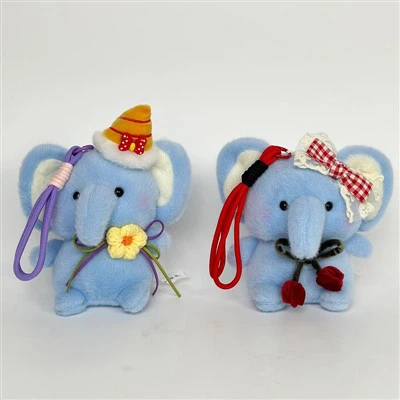
First off, let’s get the basics out of the way—there’s no one global set of rules, which is low-key a headache when you’re shipping plushies across countries. The two big ones I deal with daily are ASTM F963 over in the U.S. and EN 71 for Europe. If you’re selling anywhere else, you’re basically playing puzzle pieces to match whatever local market’s rules are, but those two are the heavy hitters. Let’s start with the stuff everyone assumes is fine: fabric. I used to think “plush fabric is just soft fabric,” but nope—there are strict flammability tests here. For ASTM F963, any stuffed animal that’s for kids under 12 (which is most of what I make) has to pass a small flame test. The rule is: if a tiny flame is applied to the fabric for like 10 seconds, it can’t keep burning more than a half-inch past the flame, and can’t melt or drip down. That was a huge learning curve for me. Early on, I tested a batch of super fuzzy, cheap fabric I found online, and it totally failed. We had to rework the whole fabric source, which set my production timeline back two weeks and made me swear I’d never skimp on material quality again. Why does this matter? Kids (and even adults) might drag a stuffed animal near a candle, a space heater, or even a campfire, and you don’t want that fuzzy thing turning into a fire hazard.
Next up is the filling. Oh man, filling is a trickier part than you’d think. For kids under 3, you can’t use loose stuffing at all. ASTM F963 bans loose pellets, cotton, or anything that can come out easily for that age group—because if a toddler shoves a handful in their mouth, it’s a choking hazard. Wait, even for older kids? The stitching on the stuffed animal has to be strong enough that the filling doesn’t escape, right? EN 71 has specific thread tensile strength tests too—so we don’t just use regular old thread. We use heavy-duty, color-fast thread that’s tested to not snap even if a kid pulls at a seam like they’re trying to rescue a stuffed animal from the bottom of a toy bin. I once had a customer send a pic of their 2-year-old’s stuffed bear that had a seam split, and the stuffing was coming out. Turns out the factory we used had cut corners on thread to save a few cents per unit. That was a wake-up call. Now every batch gets random thread tension tests, even after we audit the factories. Also, the filling itself can’t have any toxic chemicals. Lead is a big no, obviously, but also stuff like phthalates and formaldehyde. A lot of cheap filling uses recycled materials, but those can leach chemicals. We only use 100% virgin polyester filling that’s OEKO-TEX certified—no cut corners here. I still check every COA (Certificate of Analysis) that comes with the filling, because I’d never want a parent to worry that their kid’s stuffed rabbit is making them sick.
Choking hazards are another big one, especially for small kids. Let’s be real—little kids put everything in their mouths. So any part of a stuffed animal that’s detachable (like eyes, noses, bows, or even tiny scarves) has to pass the “small parts test.” What’s that? It’s a little plastic cylinder—if a part fits entirely inside that cylinder, it’s considered a choking hazard for kids under 3, and you can’t sell it with that part. Early on, we made a tiny stuffed fox with felt ears that were super thin. They fit the small parts test cylinder, so we had to scrap that design and make the ears a little thicker, or attach them with way more stitches. We actually had a design for a tiny plush cat that had a little fabric collar with a plastic bell on it. The bell fit the small parts cylinder, so we switched to a fabric bell that’s stitched on so tight it can’t come off. No bell = no risk, so we went with it. It’s a small change, but it makes all the difference. Also, for kids under 1, the rules are even stricter—we don’t make any plushies with detachable parts at all for that age group. No bows, no buttons, nothing that can come off. I’ve seen way too many news stories about kids choking on small toy parts, and it’s not worth taking that risk.
Now, let’s talk about chemicals beyond the filling. The fabric dye is a huge one. We use water-based, non-toxic dyes that are lead-free and phthalate-free. For ASTM F963, there are limits on heavy metals in dyes—lead, arsenic, cadmium, all that stuff. We tested a batch of yellow plush fabric once, and the dye had way too much lead in it. We had to throw out the whole batch, and that was like $8k down the drain. I was furious, but it’s non-negotiable. If a kid is chewing on the ear of their stuffed animal, they shouldn’t be ingesting toxic chemicals. EN 71 has even stricter limits on some of these chemicals, so if we’re selling to Europe, we have to use even more specific dyes. Also, no flame retardants that are harmful? Wait, right—some old flame retardants for fabrics were toxic, but the standards now ban those. We only use fabrics that are inherently flame-resistant without any added chemicals, which is better for the kid and better for the planet too. That’s a win-win for me, honestly—customers care about sustainability now, so it works on two fronts.
Wait, what about labeling? Oh man, labeling is so important, and it’s easy to mess up. The standards require you to label the age group the stuffed animal is intended for, right? So something like “Ages 3+” has to be clearly marked on the tag. For kids under 3, you have to state that it has no detachable parts. Also, you have to list the materials: what the fabric is, what the filling is, all that stuff. I used to skip some of the smaller text on the tag, until we got a complaint from a parent who said their kid’s stuffed dog had unmarked loose threads that almost caused a problem. We now print all labeling in 12pt font minimum, clearly state age ranges, and include the safety certifications (like ASTM F963 or EN 71) right on the tag. It’s extra work, but it’s not optional. If a regulator comes in, they’re gonna check that tag first, and if it’s missing info, they can pull the whole batch from shelves. I’ve seen that happen to other companies, and it’s a nightmare—so I prioritize labeling now.
Let me also talk about third-party testing. You can have all your documents and your factory’s promises, but you have to get an independent lab to test every batch, right? I used to think this was just a scam the big companies use, but nope. It’s the only way to make sure nothing slips through the cracks. For every batch, we send 10 random stuffed animals to a lab to test for chemical content, flammability, small parts, thread strength—everything. It costs a few grand a batch, but it’s worth it. Last quarter, a lab found a tiny amount of a phthalate in the filling that our supplier missed. We sent the supplier a note, they fixed their filling process, and we re-tested the batch. If we didn’t do that third-party test, we would’ve shipped that bad batch, and that could’ve caused harm to a kid. No amount of money is worth that. I tell all my fellow small toy suppliers—do not skip the third-party testing. It’s not a cost, it’s an investment in your brand and in the safety of the kids who love your toys.
Now, let’s get real for a second—safety standards aren’t perfect. Like I said earlier, different countries have different rules, and it’s a pain to keep up with. Last year, we got a big order from a company in Canada, and their standards are a mix of ASTM and some Canadian-specific rules, so we had to adjust our fabric and labeling for that order. It’s not impossible, but it’s time-consuming. Also, there are always new regulations popping up—like in 2022, the EU updated EN 71 to add more limits on certain chemicals in textile dyes, so we had to switch all our dye suppliers to meet that new rule. It’s a moving target, but that’s part of the job. I stay subscribed to toy safety blogs and join industry groups so I don’t get blindsided by new rules.
At the end of the day, why does all this matter? I started this company because I love seeing a kid light up when they get a new stuffed animal. My niece has a sloth plushie from my first small batch, and she’s had it for three years—she sleeps with it every night, chews on its ears, drags it around everywhere. I never want to make a plushie that could hurt her, or any kid, for that matter. The safety standards aren’t just red tape—they’re the rules that make sure these fuzzy friends are actually safe for the kids who love them.

If you’re a parent looking for a trusted stuffed animal supplier, or a business owner who needs plushies for your store, I’d love to chat. We work directly with factories that meet all ASTM, EN 71, and global safety standards, and every batch goes through third-party testing. No corner-cutting, no scary chemicals, just soft, safe plushies that kids (and adults!) will love. Hit me up to talk about your needs.
Custom Plush REFERENCES
ASTM International. (2023). Standard Consumer Safety Specification for Toy Safety (F963).
European Committee for Standardization. (2022). Safety of Toys (EN 71).
OEKO-TEX International. (2024). STANDARD 100 by OEKO-TEX Product Certification.
U.S. Consumer Product Safety Commission. (2023). Small Parts Choking Hazards for Toys.
Yangzhou Beyman Toys Co., Ltd.
We are one of the most professional stuffed animal manufacturers and suppliers in China, specialized in providing high quality custom service and OEM&ODM service. We warmly welcome you to wholesale bulk stuffed animal made in China here from our factory.
Address: Room 305, North Bldg, 4 Bldg, Chuangfu Factory, No. 158, Jiannan Road, Hi-Tech Development Zone, Yangzhou City, Jiangsu Province, China.
E-mail: janzen3@beyman.cn
WebSite: https://www.plushtoyschina.com/
