Hey there! I’m a supplier of gate valves, and I often get asked about how to calculate the pressure drop across a gate valve. It’s a pretty important topic, especially if you’re in industries like oil and gas, water treatment, or chemical processing where gate valves are widely used. So, I thought I’d break it down for you in this blog post. Gate Valves

Why is Pressure Drop Important?
Before we dive into the calculation, let’s talk about why pressure drop is a big deal. Pressure drop is basically the decrease in pressure that occurs as a fluid flows through a valve. It might seem like a small thing, but over time, it can have a significant impact on your system’s efficiency. A high pressure drop means your pumps have to work harder to maintain the flow, which uses more energy and can lead to higher operating costs. It can also affect the performance of other components in the system. So, getting a handle on pressure drop is crucial for optimizing your system and saving some bucks in the long run.
Factors Affecting Pressure Drop Across a Gate Valve
There are several factors that can influence the pressure drop across a gate valve. Understanding these factors will help you get a more accurate calculation.
Valve Size
The size of the gate valve plays a major role. Generally, larger valves have a lower pressure drop because they offer less resistance to the flow of fluid. This is because the cross – sectional area through which the fluid can flow is larger, allowing the fluid to move more freely.
Valve Position
The position of the gate within the valve is also important. When the gate valve is fully open, the pressure drop is usually at its minimum because the flow path is least obstructed. However, as the gate starts to close, the flow area decreases, and the pressure drop increases significantly. For instance, when the valve is only partially open, the fluid has to flow through a smaller opening, which causes it to speed up and creates more turbulence, resulting in a higher pressure drop.
Fluid Characteristics
The type of fluid flowing through the valve is another key factor. Fluids with higher viscosities, like thick oils, will experience a higher pressure drop compared to less viscous fluids like water. This is because viscous fluids have more internal friction, which makes it harder for them to flow through the valve. The density of the fluid also matters. Heavier fluids will generally have a higher pressure drop as they require more energy to move.
Flow Rate
The flow rate of the fluid is directly related to the pressure drop. As the flow rate increases, the pressure drop across the valve also increases. This is because at higher flow rates, there is more kinetic energy of the fluid, and more energy is dissipated as it passes through the valve due to friction and turbulence.
Calculating Pressure Drop
Now, let’s get into the nitty – gritty of calculating the pressure drop across a gate valve. There are a few different methods you can use, depending on the information you have available.
Using the Resistance Coefficient (K – factor)
One of the most common ways to calculate pressure drop is by using the resistance coefficient, also known as the K – factor. The K – factor is a dimensionless number that represents the resistance of the valve to fluid flow. Different valve sizes and types have different K – factors. You can usually find the K – factor for a particular gate valve in the manufacturer’s documentation.
The formula for calculating pressure drop using the K – factor is:
$\Delta P = K\frac{\rho v^{2}}{2}$
Where:
- $\Delta P$ is the pressure drop (in Pa or psi)
- $K$ is the resistance coefficient of the gate valve
- $\rho$ is the density of the fluid (in kg/m³ or lb/ft³)
- $v$ is the velocity of the fluid (in m/s or ft/s)
To use this formula, you first need to determine the velocity of the fluid. You can calculate the velocity using the volumetric flow rate ($Q$) and the cross – sectional area of the pipe ($A$) through which the fluid is flowing:
$v=\frac{Q}{A}$
Let’s say you have a gate valve with a K – factor of 0.2, the fluid is water with a density of 1000 kg/m³, and the velocity of the water is 2 m/s. Using the formula, the pressure drop would be:
$\Delta P = 0.2\times\frac{1000\times2^{2}}{2}= 400$ Pa
Using the Flow Coefficient (Cv)
Another method is to use the flow coefficient, or Cv. The Cv is a measure of the valve’s capacity to pass fluid. It’s defined as the number of US gallons per minute of water at 60°F that will flow through the valve with a pressure drop of 1 psi.
The formula for calculating pressure drop using the Cv is:
$\Delta P = (\frac{Q}{Cv})^{2}\times SG$
Where:
- $\Delta P$ is the pressure drop (in psi)
- $Q$ is the volumetric flow rate (in US gpm)
- $Cv$ is the flow coefficient of the gate valve
- $SG$ is the specific gravity of the fluid
For example, if you have a flow rate of 100 gpm, a Cv value of 50, and the fluid is water (so $SG = 1$), the pressure drop would be:
$\Delta P=(\frac{100}{50})^{2}\times1 = 4$ psi
Practical Tips for Reducing Pressure Drop
Now that you know how to calculate pressure drop, here are some practical tips to help you reduce it in your system.
Choose the Right Valve Size
As I mentioned earlier, valve size matters. Make sure to select a gate valve that is appropriately sized for your system. A valve that is too small will cause a high pressure drop, while a valve that is too large can be more expensive and might not function as effectively.
Keep the Valve Fully Open
If possible, keep the gate valve fully open. This will minimize the obstruction to the flow and result in the lowest pressure drop. Only close the valve when necessary, such as for maintenance or system shutdown.
Consider the Fluid and System Conditions
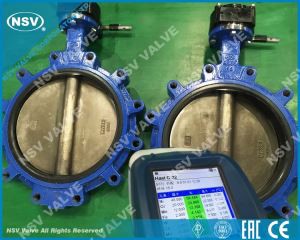
Take into account the characteristics of the fluid and the operating conditions of your system when choosing a gate valve. For high – viscosity fluids, you might need a valve with a lower K – factor or a larger Cv to reduce the pressure drop.
Contact Us for Your Gate Valve Needs
Cryogenic Globe Valve If you’re looking for high – quality gate valves and need more information on pressure drop calculations or how our valves can fit into your system, don’t hesitate to reach out. We have a wide range of gate valves that are designed to minimize pressure drop and offer optimal performance. Whether you’re in a small – scale water treatment plant or a large – scale oil refinery, we’ve got the right valve for you. Get in touch with us to start a conversation about your specific requirements and let’s work together to find the best solution for your system.
References
- Crane Technical Paper 410, "Flow of Fluids Through Valves, Fittings, and Pipe"
- Perry’s Chemical Engineers’ Handbook
- Valves Manufacturers Association (VMA) Standards
NSV Valve Corporation
NSV Valve Corporation is one of the most professional gate valves manufacturers and suppliers in China, featured by quality products and good service. Please rest assured to buy gate valves made in China here from our factory.
Address: Puyi Road,Sanqiao Industrial Zone, Oubei Street, Yongjia County,Zhejiang,China
E-mail: info@nsvvalve.com
WebSite: https://www.nsvvalves.com/
