Hey there, let’s cut to the chase: if you’re a lab tech, research lead, or safety manager prepping for work that mixes pathogens and radioactive materials, you’ve probably Googled “can a biosafety cabinet (BSC) handle radioactivity?” more than once. As someone who’s spent years in the BSC game (not just selling ’em, but fixing ’em, training teams on ’em—yep, the messy, real stuff), I get the confusion. It’s not just a random question; it’s about keeping your team from exposure, not just checking a safety box. Biosafety Cabinet

First, let’s break down what a standard BSC actually does, because that’s where most people trip up. BSCs are designed for biosafety—so you want to keep your sample (think bacteria, viruses, cell cultures) pure, and keep you from breathing in or touching those bad pathogens. The core here is HEPA filters, those magical mesh screens that trap 99.97% of particles 0.3 microns and bigger, and airflow: Class II, the most common type, blows air into the work zone from the front and pulls it through HEPA filters to the exhaust. That’s great for bugs, but radioactivity is a whole other beast.
Radioactive materials come in different flavors, right? There’s alpha, beta, gamma—each behaves totally different. Alpha particles are big, heavy, they don’t even penetrate a sheet of paper, but if you inhale or ingest them, they wreck cells from the inside. Beta is smaller, can get through skin or thin plastic, gamma is the super-penetrating one that needs lead or concrete to block. Now, can a regular BSC stop these? Let’s be clear: standard BSCs aren’t made for shielding radiation. Their casings are thin plastic or mild metal, no lead lining—so gamma would blast right through, no problem. And the exhaust HEPA? It traps particles, sure, but it’s not rated for radioactive isotopes that might vaporize (like if you accidentally heat a sample too hot) or generate airborne radioactive dust. That’s a recipe for a bad day.
Wait, but hold on—does that mean you never use a BSC with radioactivity? No, not exactly. There are workarounds, but you can’t just grab your standard Class II and call it a day. Let’s say you’re handling a small amount of a low-energy beta emitter, like tritium (it’s weak, beta only) or carbon-14, and you’re doing liquid handling, not something that’ll make dust or fumes. A BSC might act as a secondary barrier, but only if you add extra shielding. Like, put your sample tray inside a lead-lined insert made for the BSC work zone. But here’s the catch: you still have to track radiation exposure separately, because the BSC doesn’t block it. It’s a bonus, not a solution.
Now, if you’re dealing with high-activity radioisotopes, or anything that could create airborne radioactive contaminants (like cell lysis with P-32, or work with volatile radionuclides), a regular BSC is a no-go. You need a radiation-specific enclosure, sometimes called a “fume hood” but not the regular kind—wait, no, let’s get the labels right. For mixed biohazard and radiation work, you need a Class III BSC? No, wait—Class III is for the most dangerous pathogens, it’s a sealed box with gloves. But there’s a crossover: biosafety cabinets with additional radiation shielding, or specialized units that combine both HEPA filtration and radiation shielding. That’s the stuff we supply. Let me tell you, when we helped a cancer research lab last year, they were handling radiolabeled antibody samples and SARS-CoV-2 variants. Their old BSC didn’t have a barrier for the I-125 they were using, so we retrofitted a Class II Type B2 BSC with a thin lead lining on the side walls and a lead glass viewing panel. It cost way less than a full rebuild, and it let them keep using their existing setup while staying compliant.
Wait, let’s talk about compliance, because that’s the part that’ll get you audited. OSHA, the CDC, NRC (Nuclear Regulatory Commission—yep, big one for radioactivity) have specific rules. The NRC says if you’re using radioactive materials in work areas that also have biohazards, you need a “dual-containment” system. A standard BSC doesn’t meet that, because it lacks radiation shielding. If you get a violation, it’s not just a fine—it could shut your whole lab down. I’ve seen it happen to a small biotech startup a couple years back; they tried to use their old BSC for R&D with low-level tritium, got inspected, got slapped with a $20k fine, and had to rush to get a specialized unit in. Don’t be that guy.
Another common myth: “HEPA filters will trap radioactive particles, right?” Yeah, technically they will. But what if the radioactive particles are small enough to get through? No, wait, HEPA traps 0.3 microns, radioactive isotopes used in labs are usually way bigger. But the problem is shielding—the particles are only dangerous if they hit you, so if you can block them from escaping the work zone, that’s good, but if the radiation penetrates to you, that’s a whole separate exposure. So even if the BSC traps the particles, you still have gamma or beta exposure if there’s no lead. That’s why dual-use cabinets exist.
Let’s also chat about workflow, because no one wants to deal with a clunky cabinet that slows down their experiments. We get it—lab time is money, and a cabinet that’s too restrictive is a pain. That’s why our specialized BSCs with radiation shielding aren’t just heavy boxes; they have adjustable airflow, easy-to-reach glove ports (if you need them), and HEPA exhaust that meets CDC biosafety standards. We tested one for a virology lab that does work with radiolabeled viral vectors—they told us it cut their sample loss by 15% because they could keep the work zone consistent, instead of switching between a BSC and a separate radiation hood. That’s the kind of win we care about, not just selling a cabinet.
Wait, what about BSCs for decontamination work? If you’re decontaminating lab equipment that’s been exposed to both pathogens and radioactive materials, a regular BSC works? No, same rule: if there’s residual gamma, no. But if you’re just cleaning up low-level beta particles, the BSC can trap the dust so you don’t inhale it. But again, that’s a secondary measure, not the primary radiation control.
Let me wrap up the key points here, because I know this is a lot to parse. 1) Standard BSCs are for biosafety, not radiation shielding—don’t use ’em for high-activity or airborne radioactive work without extra shielding. 2) If you’re handling low-level, non-volatile radioisotopes, a BSC can add a layer of containment, but always pair it with proper shielding. 3) For mixed biohazard and radiation work, you need a specialized dual-containment BSC, not a generic model. 4) Compliance matters—don’t risk fines or safety incidents by cutting corners.
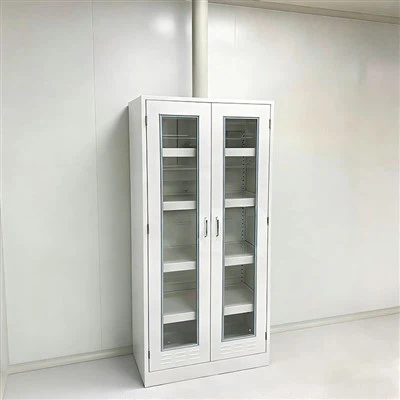
Now, if you’re in a spot where you’re not sure if your current setup works, or you need a BSC that’s tailored for your mixed-use work, that’s where we come in. We don’t just sell one-size-fits-all cabinets; we help you assess your specific radioisotopes, pathogen risks, and workflow to get the right solution. No jargon, no pushy sales calls—just straight talk about what will keep your team safe and your lab running smoothly. If you’re ready to chat through your needs, reach out to our team to set up a consultation. We’ll even do a quick site check to make sure your space works with any new cabinet we recommend.
Balance Tables References:
- U.S. Nuclear Regulatory Commission. "Radiation Safety Requirements for Mixed Hazard Facilities." NRC Regulatory Guide 8.12, 2019.
- Centers for Disease Control and Prevention. "Biosafety in Microbiological and Biomedical Laboratories (BMBL), 6th Edition." CDC, 2020.
- Occupational Safety and Health Administration. "Hazard Communication and Ionizing Radiation Standards." OSHA, 2022.
- World Health Organization. "Laboratory Biosafety Manual, 4th Edition." WHO Press, 2020.
HAMECC(Shanghai) Lab Solutions Co., Ltd.
We’re well-known as one of the leading biosafety cabinet manufacturers and suppliers in China, featured by quality products and good price. Please rest assured to buy customized biosafety cabinet made in China here from our factory.
Address: Building 1, No. 2222, Huancheng Road, Jiading District, Shanghai
E-mail: info@hamecc.com
WebSite: https://www.hamecc.com/
